Georgetown Business District: The Industrial Corridor Turned Entrepreneur Hub |
Southend Sally's take on Georgetown and small business |
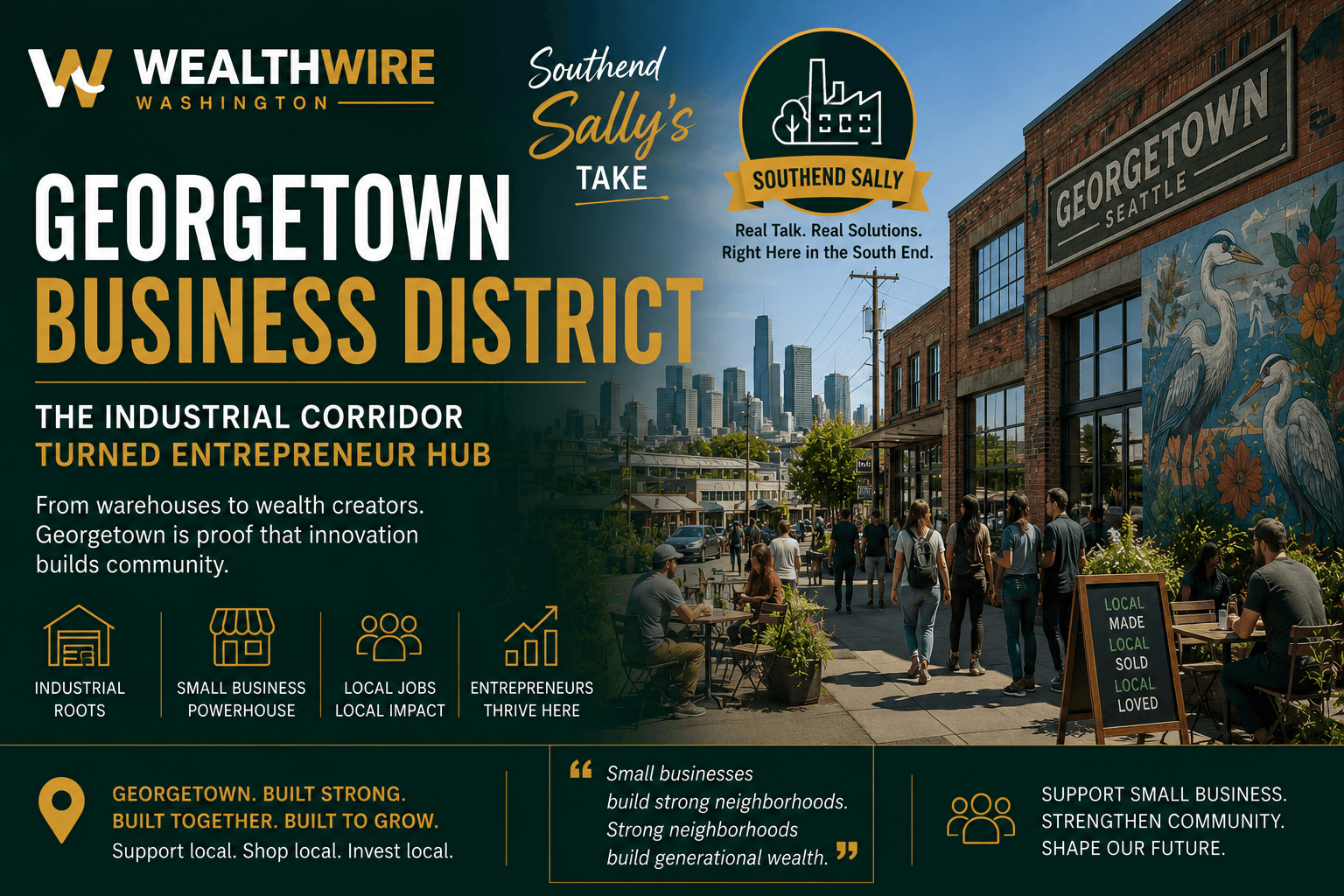
Southend Sally's guide to Georgetown, manufacturing, makers, and building wealth close to home
For more than a century, Georgetown has been the working heart of South Seattle. What began as a center for railroads, breweries, manufacturing, and maritime commerce has evolved into one of the city's most unique neighborhoods—where industrial businesses, artists, manufacturers, and entrepreneurs work side by side.
That combination is creating exciting opportunities for South End residents looking to build income, launch businesses, or develop careers without leaving their community.
Walk through Georgetown today and you'll find machine shops next to coffee roasters, fabrication companies sharing the neighborhood with breweries, creative studios, technology firms, and locally owned restaurants. Historic industrial buildings now provide flexible workspaces that attract manufacturers, makers, designers, and small businesses looking for affordable, adaptable space.
For entrepreneurs, Georgetown offers something increasingly difficult to find in Seattle: a neighborhood built for people who create things.
Whether you're launching a woodworking business, metal fabrication shop, clothing brand, food production company, print studio, media company, or AI-powered consulting business, Georgetown's maker culture encourages collaboration and innovation.
Its location also creates strategic advantages. Sitting between Interstate 5, Highway 99, Boeing Field, the Duwamish Waterway, and the Port of Seattle, Georgetown provides excellent access for shipping, logistics, suppliers, and customers throughout the Puget Sound region. Those transportation connections have supported local industry for generations and continue to make the neighborhood attractive for businesses that manufacture, distribute, or build products.
Another trend worth watching is the continued growth of Seattle's creative economy. Design, digital media, architecture, gaming, film, and other creative industries are projected to expand over the next several years, creating new demand for creative entrepreneurs, makers, and independent professionals.
Community organizations are also working to ensure Georgetown's future includes opportunities for local residents. Projects like the reimagining of the historic Georgetown Steam Plant are exploring ways to combine arts, education, environmental restoration, and community programming into a shared neighborhood asset.
For South End families, Georgetown represents more than a destination for weekend coffee or breweries. It demonstrates how neighborhoods rooted in manufacturing can evolve into engines for entrepreneurship and community wealth.
You don't need millions of dollars to participate. Learning a skilled trade, starting a service business, selling products online, offering AI consulting, or partnering with local manufacturers are all realistic pathways to creating additional income while staying connected to South Seattle.
Let's Dig Into What This Means for You, Your Family, and Your Financial Future
The biggest opportunity isn't simply watching Georgetown grow—it's becoming part of that growth.
If you've been thinking about starting a business, developing a trade, launching a product, or building multiple income streams, Georgetown offers inspiration and practical examples of people creating opportunity from craftsmanship, innovation, and entrepreneurship.
South Seattle has always been built by makers. Today's tools may include AI, e-commerce, and digital marketing instead of steam engines and railroads, but the principle remains the same: build something valuable, solve real problems, and invest in your community.
Southend Sally's Wealth Tip: The future belongs to neighborhoods that create, manufacture, and innovate. Georgetown proves that South Seattle's industrial heritage isn't just history—it's a blueprint for the next generation of entrepreneurs. |
More from WealthWire South End
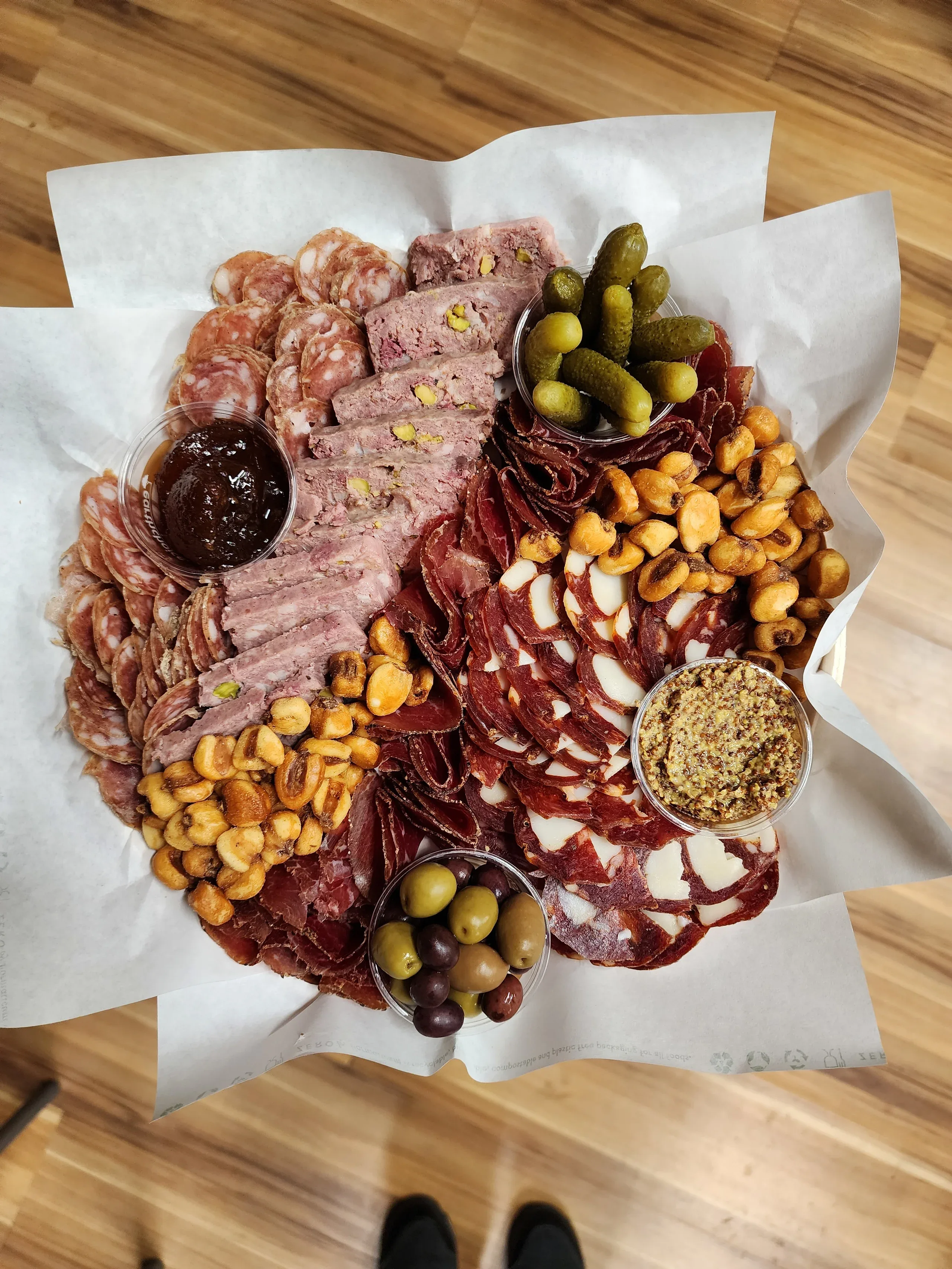
Cheese Shop Delights Beacon Hill, Rainier Valley, and Beyond
Discover the best cheese shop experience with expert cheesemonger advice and artisan cheese selections in Beacon Hill, Rainier Valley, and nearby Seattle neighborhoods.
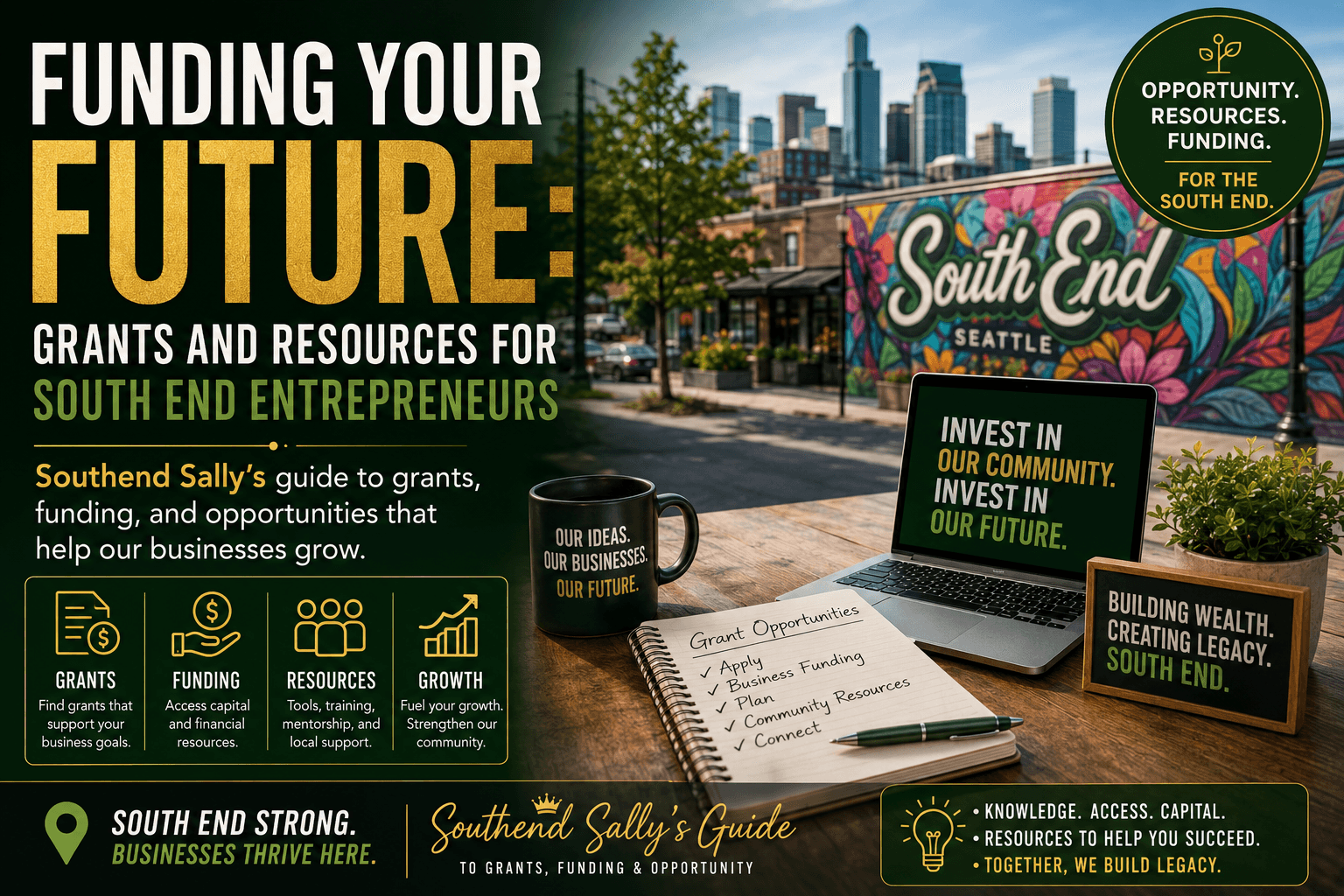
Funding Your Future: Grants and Resources for South End Entrepreneurs
Comprehensive guide to funding opportunities for South Seattle businesses
Rainier Valley Small Business Spotlight: Local Entrepreneurs Creating Community Wealth
Profiles of successful local entrepreneurs and their community impact
South Park to Skyway: Building Equity Through Strategic Property Investment
Investment strategies for building long-term wealth in South End's emerging neighborhoods
41 Comments
Join the conversation
The wealth-building angle is what sets this apart from typical neighborhood puff pieces. It's not just telling people Georgetown is cool, it's asking how South End families can actually benefit from what's happening there.
My concern is always gentrification. Once a neighborhood gets written up as a cool place for entrepreneurs and makers, rents go up and the people who built it get pushed out. Seen it happen in Georgetown already at smaller scale.
You're naming a real tension, and it's one we think about too — the article specifically highlights community wealth-building for South End residents precisely because displacement is a genuine risk when neighborhoods get attention without protective investment in the people already there.
Would love a follow-up piece specifically on the Steam Plant project. That building has so much history and the idea of turning it into a community arts and education hub sounds amazing if they actually do it right.
The e-commerce mention is key. You don't need a storefront if you manufacture something people want. Georgetown space plus an online shop is actually a viable business model for a lot of people.
Exactly right — the combination of affordable Georgetown workspace for production and an online storefront for distribution is a genuinely accessible business model, and it's one of the more practical wealth-building pathways we wanted readers to take seriously.
Been saying for years that the Duwamish corridor is underutilized for small business development. Georgetown is the proof of concept. Now we need to extend that energy down toward Tukwila too.
That's a sharp observation, and the Duwamish corridor as a continuous small-business spine stretching toward Tukwila is a conversation that deserves its own deep dive — consider that a future Southend Sally topic.
Mike CastellanoThe Tukwila piece is a real missed opportunity. There's so much underused industrial land along that corridor and the transit connections are already there. Georgetown didn't happen by accident though — it took years of small businesses betting on the neighborhood. Someone's got to start doing that further south.
As someone who works in digital media, I sometimes forget that the South End has real infrastructure for creative businesses. Georgetown proves there's more here than people assume.
Priya NambiarSame honestly. I think a lot of people in creative fields default to looking at Capitol Hill or SLU and don't even consider the South End. The infrastructure here is actually pretty solid if you know where to look.
That's exactly the assumption we wanted to challenge — Georgetown's existing infrastructure means South End creatives don't have to default to commuting north just to find a serious professional environment.
I run a small woodworking operation out of my garage. Didn't know Georgetown had flexible maker spaces. Going to look into this more seriously this week.
The history piece really landed for me. Knowing that railroads and breweries built this neighborhood makes it feel less random that makers and startups are there now. It's the same spirit, different tools.
You put it beautifully — same entrepreneurial spirit, different tools — and that continuity is really the heart of what makes Georgetown's story more than nostalgia.
Georgetown is great but let's not pretend it's all roses. Traffic on East Marginal is brutal and parking for small business customers can be a headache. Real stuff people deal with daily.
I appreciate that this focuses on building wealth without leaving South Seattle. Displacement is real and anything that helps people stay and build here matters.
A friend of mine started a small print shop in Georgetown a few years back and it's doing really well. The community there actually supports each other. It's not just a talking point.
Tommy SerranoThat tracks with what I've heard. There's a real informal network there — people refer each other, share equipment sometimes, help each other out. Not every neighborhood has that kind of culture and it makes a huge difference when you're starting out.
The welding and trade school angle is real. South Seattle College has programs that feed directly into this kind of work. Wish more families knew that a trade can pay just as well as a four year degree.
This is such an important point, and South Seattle College's programs are a concrete, affordable on-ramp that more South End families absolutely should know about — thank you for lifting that up.
Honest question — how accessible are those flexible workspaces for someone just starting out with not a lot of capital? The article makes it sound promising but doesn't really address cost.
I grew up near Georgetown and my dad worked at one of the old manufacturing plants. Seeing entrepreneurs move in alongside the older industrial businesses feels like the neighborhood honoring its roots while growing.
Brenda NgThat continuity is what makes Georgetown feel different from a lot of neighborhoods that just got flipped overnight. The old industrial identity is still there, it's just got new layers on top of it. Your dad's era built the foundation for what's happening now.
The point about creative industries expanding over the next few years is worth paying attention to. Gaming, film, design — those aren't just Seattle things anymore, they're South Seattle things too if we position ourselves right.
My husband runs a small metal fab shop and has been in Georgetown for six years. The affordable industrial space is real, but it's getting harder to find. Rents are creeping up even there.
Rosa FuentesYeah the rent creep is real. A friend was looking for shop space down there last year and said it's noticeably different from even three years ago. Hoping the city does something to protect industrial zoning before it's too late.
I've walked through Georgetown a hundred times and never thought of it as an opportunity. Just saw it as old buildings and coffee. Reading this made me look at it completely differently.
Would love to see more specific resources listed, like which community organizations are actually helping people get started. The article points in the right direction but leaves you wanting more details.
The access to Boeing Field and the Port is something people don't talk about enough. If you're running any kind of product-based business, that location is a genuine advantage. Not many neighborhoods can say that.
My daughter has been selling her handmade jewelry online and I never thought about Georgetown as a place she could actually set up a small studio. This gave me a lot to think about.
Tanya OkonkwoThere are actually a few shared studio spaces in Georgetown that might be perfect for something like jewelry making — lower cost than going solo. Might be worth just driving through and seeing what's posted on some of those buildings.
I'm a little skeptical about the AI consulting angle. Feels like it's being thrown in there to sound current. Georgetown's strength is physical making, not remote gig work.
It's a fair pushback, and the physical making is definitely Georgetown's core identity — we included AI consulting as one example of the broader entrepreneurship ecosystem, not as a replacement for the hands-on craft that defines the neighborhood.
My family has lived in South Seattle for three generations. Georgetown was always the neighborhood where people actually made things. Good to see that spirit being recognized instead of treated like it needs to be replaced by condos.
The Georgetown Steam Plant reimagining project is something I've been following for a while. Hoping it actually becomes a community resource and not just another thing that looks good on paper.
We share that hope, which is why we framed it carefully as a project 'exploring ways' rather than a done deal — the community pressure to make it a genuine neighborhood asset rather than a showpiece is exactly what keeps these projects honest.
Lena_SouthendTotally agree. There have been so many "reimagining" projects in this city that stall out or end up benefiting developers more than the actual community. I want to be hopeful about the Steam Plant but I'll believe it when I see programming that's actually accessible to South End residents.
Been working in a machine shop off Airport Way for 12 years. Nice to finally see someone talk about what Georgetown actually is instead of just the beer and brunch crowd. This neighborhood has real industry and real jobs.
I love seeing Georgetown highlighted as more than breweries and coffee shops. My son is interested in welding, and this article opened my eyes to how skilled trades, manufacturing, and entrepreneurship can create real wealth close to home.
Maria T.Welding is such a solid path right now. My nephew went through Renton Tech's welding program and had job offers before he even finished. Georgetown has shops that hire locally too — worth looking into for internships or apprenticeships while he's still learning.