South Seattle Digital Equity Grants: Up to $45,000 Available |
The 2026 Technology Matching Fund is open, with an October 27 information session and a January 2027 application deadline |
South Seattle organizations working to close the digital divide have a timely funding opportunity worth investigating before the next grant deadline.
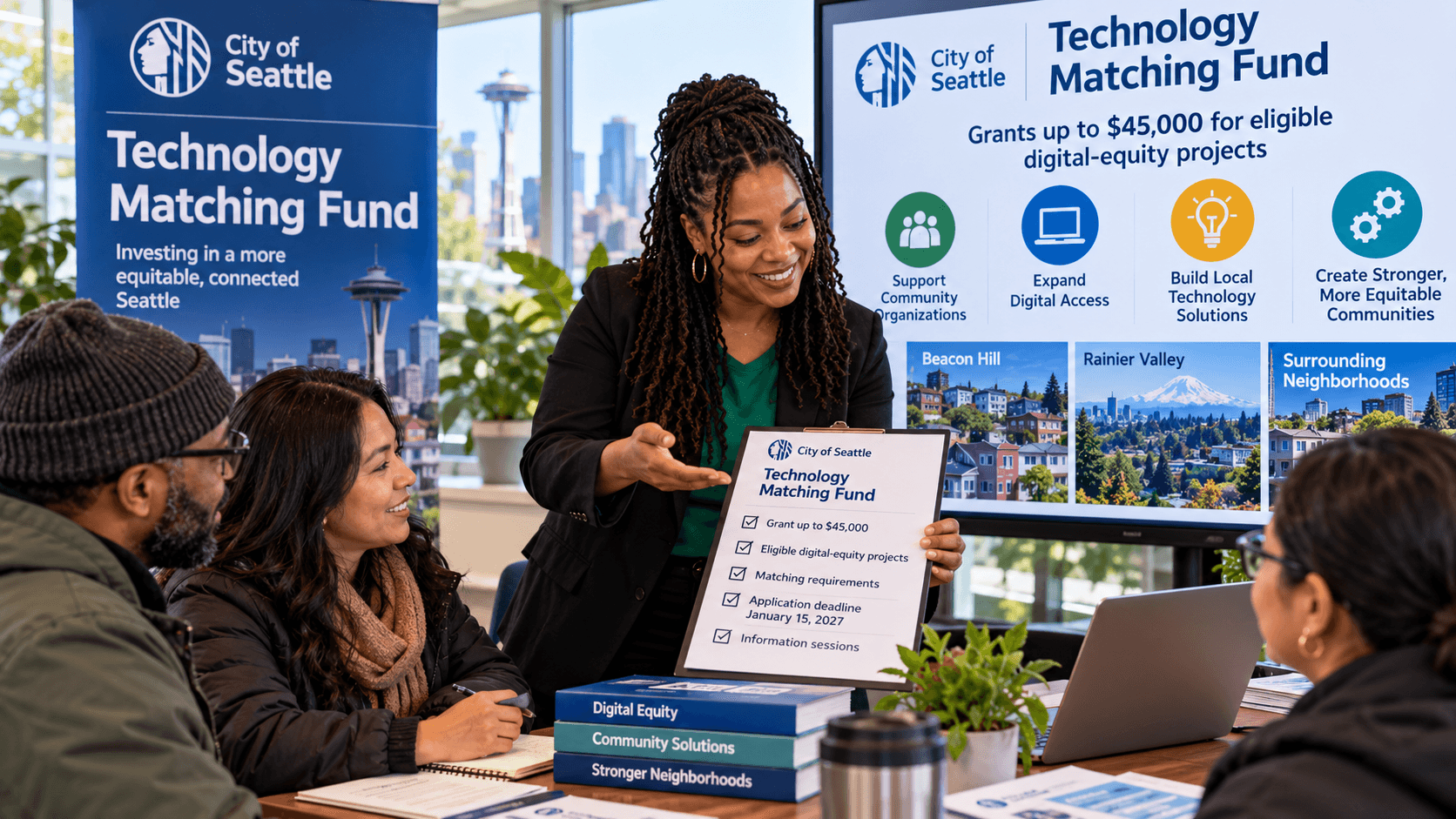
The City of Seattle Technology Matching Fund opened its 2026 application round on October 15.
Eligible projects can seek awards of up to $45,000 for work that improves technology access and digital skills.
For community groups in Beacon Hill, Rainier Valley and Columbia City, the fund may support programs that connect neighbors to practical digital tools.
Projects can include digital navigator services, hands-on literacy classes, devices with training, or internet connectivity for low-income Seattle residents.
The emphasis is on access and meaningful support, not simply purchasing technology and leaving participants to figure it out.
A neighborhood program might help older adults use online services, train job seekers to complete digital applications, or teach families basic device skills.
Those are illustrative possibilities, not promises that a particular proposal will be approved.
The city requires project activities to occur within Seattle city limits and to benefit Seattle residents.
Applicants must have a Seattle address, and the eligibility list includes nonprofits, qualifying community groups, tribal organizations and certain school-related applicants.
Groups without their own nonprofit status may need an eligible fiscal sponsor before contracting with the city.
Another significant requirement is a 25 percent confirmed community match, so applicants should start identifying resources and partners early.
Before drafting a proposal, define the residents served, the digital barrier being addressed and the measurable improvement the project should deliver.
Estimate how many people can realistically participate and what staffing, equipment and follow-up support will cost.
Ask whether the program can be completed within one year of contracting, as the guidelines require.
The city's schedule includes an in-person information session on October 27, 2026, at Douglass-Truth Library.
Organizers can also request a preliminary application review by November 17 through the city's community technology team.
The final application deadline is January 15, 2027, at 5 p.m., which gives organizations time to build partnerships without waiting until the last week.
Do not assume that a strong idea alone meets the eligibility or match rules.
Read the current guidelines, scoring criteria and application questions before committing staff time or promising a program to residents.
Community groups in Georgetown and South Park should also verify their activities and service locations against the city's geographic rules.
Keep the proposal focused on a problem residents can describe, such as access to reliable internet or confidence using essential online services.
The strongest local opportunity is to turn an existing community need into a practical, measurable digital access project.
Start with the city's official Technology Matching Fund application page for the current rules, information session and application portal. |
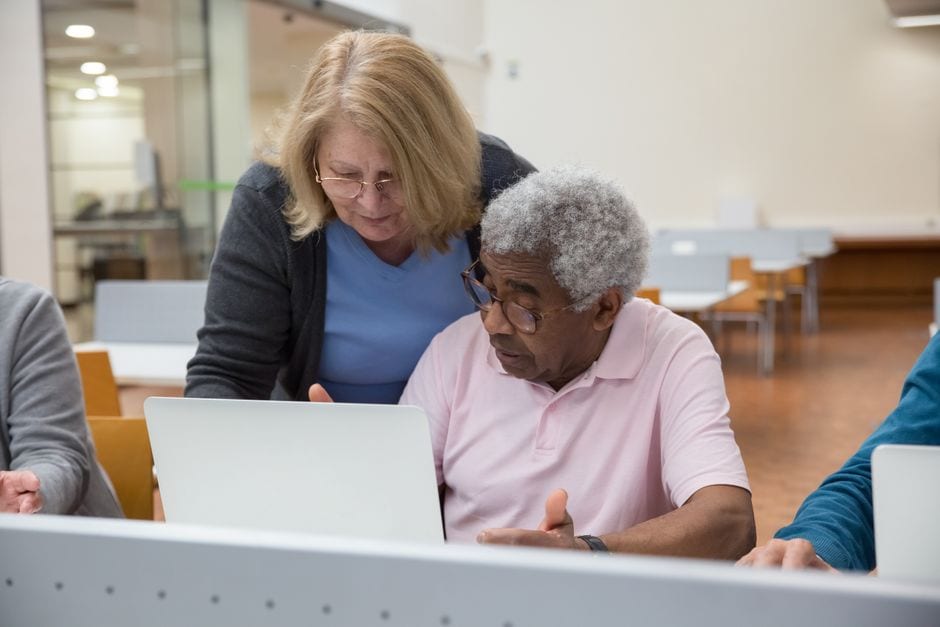 Photo by Kampus Production on Pexels |
More from WealthWire South End
South Seattle Utility Discounts: Check Eligibility Before Winter
utility discount program: Seattle City Light customers may qualify for substantial ongoing bill reductions and emergency help

South Seattle Businesses: Free Consulting Beyond the Usual Advice
small business consulting: A Seattle program offers eligible small businesses practical accounting, marketing and loan-readiness support

Rainier Valley Rainy-Season Readiness Starts at the Storm Drain
storm drain care: Seattle's Adopt-a-Drain program gives neighbors a practical way to reduce localized flooding risks

South Seattle Side Hustle? Seven Steps to Test Your Business Idea Before Spending Big
A practical validation plan for aspiring founders in Beacon Hill and Rainier Valley.
38 Comments
Join the conversation
The part about keeping proposals focused on a problem residents can actually describe is solid advice. Vague grant applications almost never get funded. Know your community and say it plainly.
Georgetown has so many under-resourced families who would benefit from this kind of program. Our neighborhood is always underrepresented in these grant conversations. Someone needs to step up and apply.
Georgetown is specifically named in the article as a neighborhood whose groups should be checking their project activities against the city's geographic rules, which means the opportunity is there, and local knowledge of those under-resourced families is exactly the kind of community grounding that makes a proposal compelling.
I went to a city grant info session at a library branch a few years ago and it was actually really useful. The staff answered questions directly and were not just reading off a slide deck.
Yolanda KimGood to hear. I always worry those sessions are just a formality but if the staff actually engage with your questions it is worth blocking the time to go.
$45,000 sounds like a lot until you price out devices, a part time navigator salary, space rental and materials for a year. Budget realistically before you commit to serving 200 people.
Really hope a group steps up for the older adults in Beacon Hill specifically. The senior center there is stretched thin and there is genuine need for patient one on one digital help.
FelicityRYes, Beacon Hill Senior Center is already so overloaded. Even a part time digital navigator a couple days a week would make a difference for the folks I see there trying to figure out MyChart or ORCA accounts.
The focus on measurable improvement is key. If you cannot describe what success looks like after 12 months you probably need to rethink the project before you apply.
My neighbor in South Park runs an informal computer help group out of her living room. Not sure if that would count as an eligible community group but this might be worth her looking into.
DebraLWShe should definitely look into it. The article mentions qualifying community groups as eligible, not just registered nonprofits. Worst case the city tells her she needs a fiscal sponsor and she goes from there.
I appreciate the honest note about strong ideas not automatically meeting eligibility. So many groups write proposals before reading the scoring criteria and then wonder why they did not get funded.
For anyone reading this who runs a small nonprofit, the preliminary review option on November 17 sounds worth using. Getting city feedback before the final deadline is free and you would be a little silly to skip it.
nadia_seaAgreed, skipping that step seems like a real missed opportunity. Even just having someone from the city tell you your budget looks off before you finalize everything could save a ton of rework.
I grew up in Rainier Valley and internet access was always spotty in our building. Families are still dealing with that same problem. Glad there is funding trying to address it.
The one year completion requirement seems tight for programs that are trying to build real community trust. Curious how strictly the city enforces that once projects get going.
Wish this had come out earlier. We were just talking at our neighborhood meeting last week about needing something exactly like this. Sharing the link with our coordinator today.
With the final deadline not until January 15, 2027, there's still a solid runway, and the October 27 information session at Douglass-Truth Library is a great first step for your coordinator to put on the calendar.
sarah_beaconSame thing happened at ours! Someone brought it up almost offhand and people got really animated about it. Good luck to your coordinator, hope they go for it.
I work with job seekers in Columbia City and the number of people who struggle to fill out online applications is really high. A funded digital navigator program here would be a game changer.
Helping job seekers complete digital applications is one of the illustrative examples the article cites as a strong fit for this fund, so the need you're describing in Columbia City aligns closely with what the city is trying to support.
January 15 deadline with an October application opening is actually a decent amount of runway. Most grants give you six weeks and call it generous. This is reasonable.
Angela D.Right, and they built in the preliminary review option in November too which is smart. You have time to actually think through your budget instead of just scrambling to submit something.
My organization tried applying for a city grant two years ago and the fiscal sponsor piece tripped us up at the last minute. Do not wait on that if you need one.
This is a valuable real-world caution, and the article flags the fiscal sponsor requirement for exactly that reason, groups without their own nonprofit status should treat securing a sponsor as step one, not a detail to sort out at the end.
roberto_hillThis is such good advice. Finding a fiscal sponsor takes longer than you think, especially if the org you approach needs board approval before agreeing. Start that conversation now.
Douglass-Truth Library is a great spot for that info session. Easy to get to on the 3 or the 4 bus. Hope they do an evening time so working folks can show up.
Does anyone know if a parent group connected to a public school could apply? The article mentions school-related applicants but does not get into details.
The article notes "certain school-related applicants" are included in the eligibility list, so a parent group's eligibility would depend on its specific structure and whether it has nonprofit status or an eligible fiscal sponsor, the city's current guidelines and community technology team are the right place to get a definitive answer before you invest planning time.
The part about not just buying devices and walking away is huge. I have seen so many programs donate tablets to families and then nothing. The training follow-up is what actually matters.
You've identified exactly the distinction the fund is designed to reward, the city's emphasis on "meaningful support" over simple device distribution is built into the scoring criteria, which is why follow-up training and navigator services are listed as strong project models.
Priya NambiarCompletely agree. My mom got a tablet through one of those donation drives and it just sat in a drawer because no one showed her how to set it up. Follow-through is everything.
Good to see Georgetown and South Park mentioned. We always get left out of these conversations. Hopefully some of our community orgs look into this one.
I helped my mom learn to use her tablet last year and it took months of weekly sessions. Programs like this are so needed for older adults in Beacon Hill. Hope a local group applies.
The 25 percent community match requirement is real. A lot of small groups get excited about a grant and then realize they don't have the match lined up. Start there first.
That's exactly why the article flags the 25 percent confirmed match as something to tackle early, not after a proposal is drafted, identifying those resources and partners first can save a lot of last-minute scrambling.
Our little tech help group in Rainier Valley has been running on volunteers and donated laptops for two years. $45,000 would change everything for us. Going to look into this seriously.
A two-year track record of volunteer-run programming and demonstrated community need is precisely the foundation the city looks for when assessing whether a project is grounded and feasible, the October 27 information session would be a worthwhile first stop.