
Rainier Beach Class of 2027: File the Right Financial Aid Form Before You Choose a School |
Southend Sally explains the 2027–28 FAFSA and WASFA, the school-specific deadline trap, and how families can compare actual college costs. |

College affordability can feel like a problem for another day when a Rainier Beach senior is juggling classes, work and family responsibilities. But the financial-aid clock is already moving for the 2027–28 school year. Washington's Student Achievement Council confirms that both the FAFSA and WASFA are open, and the correct application depends on the student's circumstances.
The FAFSA is generally the path for U.S. citizens and eligible noncitizens seeking federal and state aid. The WASFA provides a route to Washington state aid for students who cannot or choose not to complete the FAFSA. Students generally complete one of these forms, not both. A family should check the eligibility guidance rather than assume citizenship status alone determines whether education is affordable.
Here's the first money move: make a shortlist of schools or training programs, then record each one's financial-aid priority date. The statewide application being open does not mean every college has the same deadline. Missing a campus priority date can affect access to limited funds even when a student remains eligible for other assistance.
The second move is to gather household information before starting. Students may need identity details, prior-year tax information, household information and school choices. Ask a school counselor or financial-aid office for help with an unfamiliar question instead of guessing. Families with changing income should also ask how a school reviews special financial circumstances.
The third move is to compare net cost, not the biggest scholarship headline. A school's published tuition is only one part of the bill. Housing, books, transportation, meals and lost work hours can change which option is actually affordable. Compare grants and scholarships separately from loans that must be repaid.
For South Seattle students, a two-year college, apprenticeship, certificate or four-year degree can each be a valid wealth-building route when the credential leads to a realistic job opportunity. Before borrowing, ask programs about completion rates, required equipment, employer connections and the total cost of finishing—not just enrolling.
If you are a returning adult student rather than a high-school senior, don't skip this process. The same state portal explains which academic-year application applies to your planned start date. The 2026–27 and 2027–28 forms are both open, so choosing the wrong year can delay processing.
Make this week's family meeting practical: pick three programs, write down their priority deadlines, decide whether FAFSA or WASFA fits, and create a shared checklist of missing documents. A completed application is not a guaranteed award, but it is a necessary step toward knowing your options.
Official source and application guidance: Washington Student Achievement Council — https://wsac.wa.gov/index.php/apply . No paid placement or affiliate relationship is associated with this article. |
More from WealthWire South End
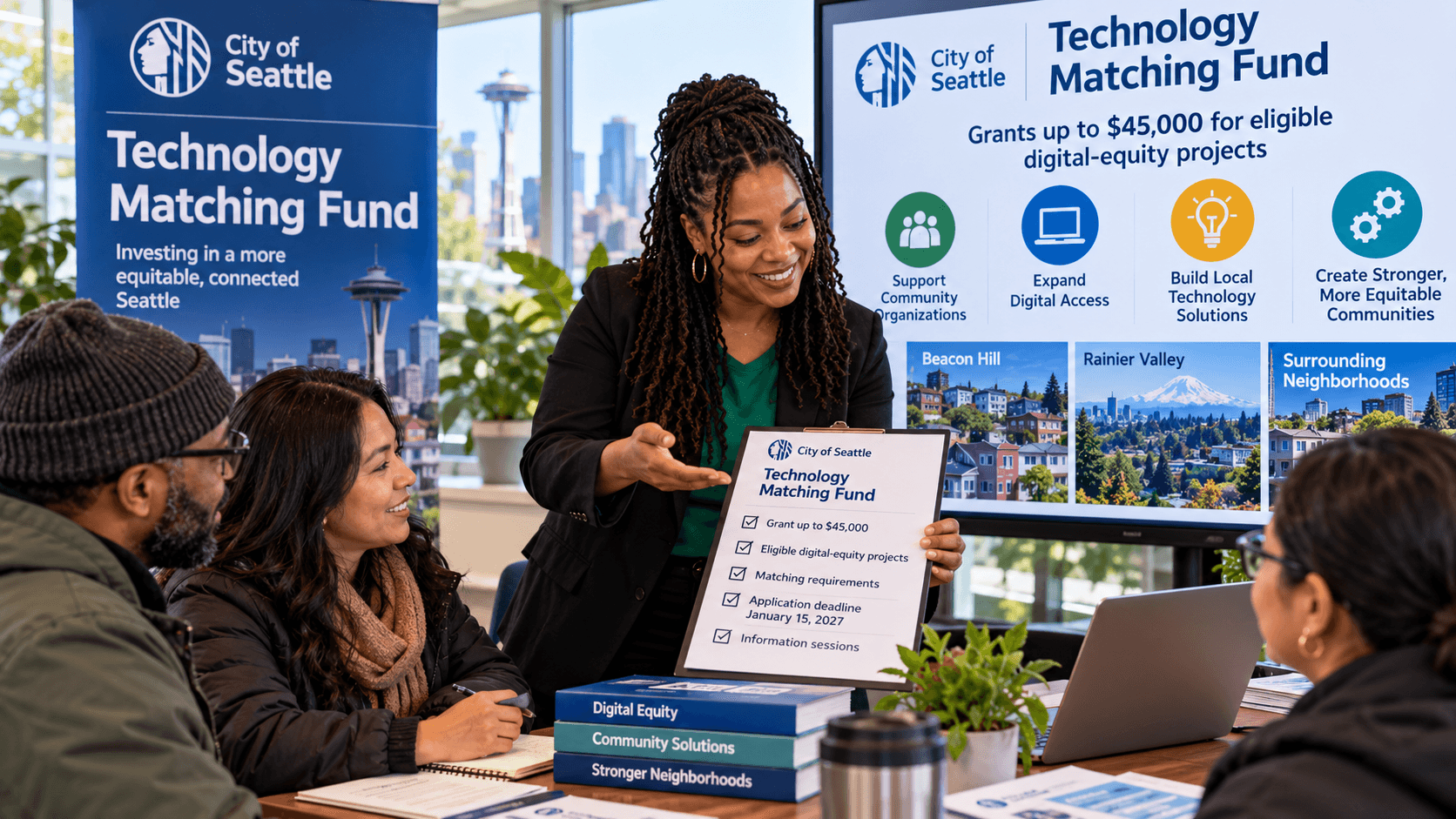
South Seattle Digital Equity Grants: Up to $45,000 Available
Digital equity grants of up to $45,000 are open for eligible South Seattle groups. Check the October 27 session and January 15 deadline.

South Seattle Utility Discounts: Check Eligibility Before Winter
utility discount program: Seattle City Light customers may qualify for substantial ongoing bill reductions and emergency help

South Seattle Businesses: Free Consulting Beyond the Usual Advice
small business consulting: A Seattle program offers eligible small businesses practical accounting, marketing and loan-readiness support

Rainier Valley Rainy-Season Readiness Starts at the Storm Drain
storm drain care: Seattle's Adopt-a-Drain program gives neighbors a practical way to reduce localized flooding risks
0 Comments
Join the conversation
Be the first to comment
Share your thoughts above.